
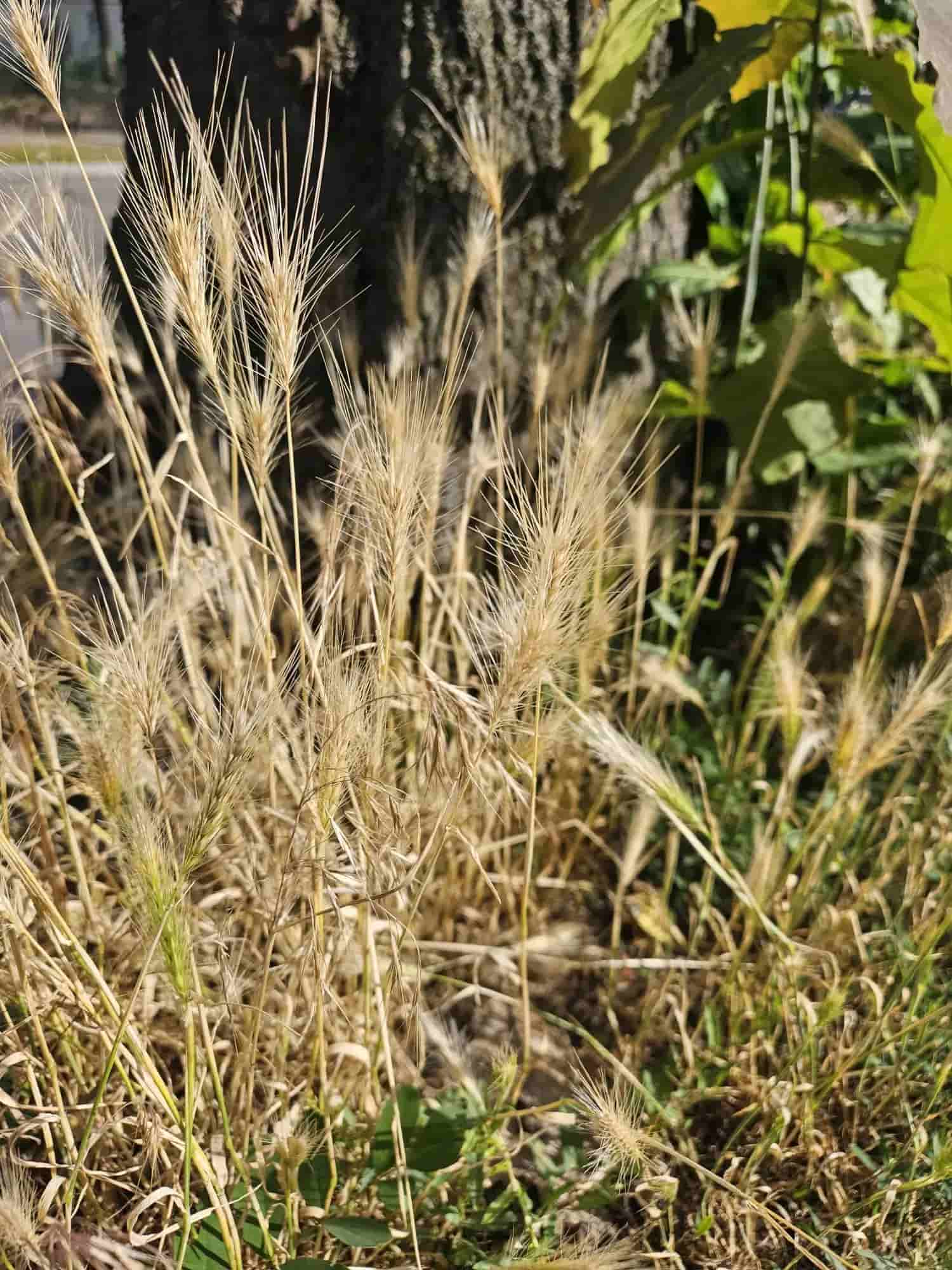
Grass awns in dogs and cats: signs, treatment, prevention
Allgemein
November 28, 2026
Grass awns are the bristly seed heads of grasses and cereals. From roughly May to September they are ripe and dry in many places – and can quickly become a painful problem for dogs and cats. Thanks to their arrow-like shape they easily catch in the coat and then penetrate ever deeper into the skin or body openings. Animals that spend a lot of time in meadows, fields or long grass are particularly at risk.
What are grass awns?
Grass awns are the rough, barbed bristles on the ears of various grasses and cereals. On a walk across a meadow or through dense undergrowth they are easily brushed off and stay stuck in the coat. The biggest danger: because of their barbs, awns only move in one direction and do not come out by themselves. On the contrary, movement and shaking push them even deeper into the coat.
Where grass awns lodge
Grass awns can migrate into the skin, the spaces between the toes, the ears, the nose, the eyes or even deeper tissue layers. There they cause painful inflammation, abscesses and in some cases serious consequential damage.
Signs by body area
- Paw: lameness, intensive licking of the paw, swelling or sensitivity to touch.
- Ear: sudden head shaking, scratching at the ear or a tilted head. If the awn migrates deeper into the ear canal, ear canal inflammation or even an injured eardrum can result.
- Nose: violent sneezing, nasal discharge or even nosebleeds.
- Eye: redness, watering, swelling and pain, up to painful conjunctivitis or injuries to the cornea.
As the symptoms usually appear suddenly, they should be taken seriously and checked by a vet promptly.
Treatment at the practice
If a grass awn is suspected, a quick examination is important. Do not try to remove the awn yourself: there is a considerable risk of injury, or the awn may be pushed even deeper. The sooner the foreign body is removed, the lower the risk of inflammation and complications.
At our practice we first thoroughly examine the affected area. Depending on where the awn is, special instruments such as an otoscope or rhinoscope are used. Some awns can be removed directly; for deeper foreign bodies a sedation or short anaesthetic may be necessary. Afterwards we check the affected tissue and treat it if needed to prevent inflammation or treat existing infections. You can see which examinations we offer in Falkensee under Services.
Prevention
You can reduce the risk considerably by checking your pet regularly after walks or time outdoors. Pay particular attention to the paws, ears, eyes and coat. For long-haired animals, regularly trimming the fur around the paws can help. Tall, dry grassy areas should be avoided where possible during awn season.
Grass awns around Falkensee
Around Falkensee, dogs and outdoor cats encounter grass awns mainly along field edges and paths, on fallow land and in meadows on the edge of the Havelland woods. If you are out and about here in summer, check paws, ears and nose after every walk. If sudden heavy sneezing, head shaking, lameness, increased licking of a paw or eye irritation follow, do not wait: early diagnosis and removal of the awn can prevent pain and serious secondary conditions.
Suspect a grass awn? The team at Tierarztpraxis Rödiger in Falkensee is there for you daily from 10 am to 8 pm, including Sundays and public holidays. Call us on 03322 / 20 98 68 or use our contact page. Outside these hours, our practice in Berlin-Reinickendorf (Scharnweberstraße 136) can be reached around the clock on 030 / 412 73 57.
